

Reverse Mortgage Loan Structuring in Australia
For many Australian seniors, the family home is their largest asset. It may hold years of built-up equity, but that equity is often locked away while day-to-day retirement costs continue to rise. A reverse mortgage can help eligible homeowners access part of that home equity while continuing to live in their property.
However, the way a reverse mortgage is structured matters.
Reverse mortgage loan structuring in Australia is not just about how much you can borrow. It is about how the funds are accessed, how interest accumulates, how future home equity may be protected, how Centrelink or aged pension entitlements may be affected, and how the loan fits your broader retirement, aged care or estate planning goals.
At Reverse Mortgages NSW, we help senior Australians understand reverse mortgage options through flexible and transparent home equity release solutions. Reverse Mortgages NSW specialises in helping seniors access the equity in their homes, with more than 20 years of experience and access to a wide network of specialist lenders.
This guide explains how reverse mortgage loan structuring works in Australia, the main options available, key safeguards, common uses and what to consider before making a decision.
What is a Reverse Mortgage?
A reverse mortgage is a type of home equity loan that allows eligible homeowners, usually older Australians, to borrow money using the equity in their home as security.
Unlike a standard home loan, regular repayments are generally not required while you continue to live in the property and meet the loan conditions. Instead, interest is added to the loan balance over time. The loan is usually repaid when the property is sold, the borrower moves into permanent aged care, or the last borrower passes away.
ASIC’s Moneysmart explains that a reverse mortgage allows you to borrow money using the equity in your home as security and, as a guide, borrowers aged 60 may be able to borrow around 15% to 20% of the home’s value, with the available amount generally increasing with age.
This is why reverse mortgage advice and loan structuring are important. The amount borrowed today can affect the equity remaining in the home later.
What Does Reverse Mortgage Loan Structuring Mean?
Reverse mortgage loan structuring refers to how the loan is set up to suit your needs, financial position and future plans.
This may include decisions about:
- How much equity to access
- Whether to take a lump sum, regular payments or a line of credit
- Whether to use funds immediately or progressively
- How interest will accumulate
- Whether to preserve a portion of home equity
- How the loan may affect aged pension or government benefits
- Whether the funds are used for retirement income, aged care, debt repayment or lifestyle needs
- How the loan may affect estate planning
- Which lender and product features suit your circumstances
Good reverse mortgage structuring aims to balance current cash flow needs with future flexibility.
For example, someone who needs to pay for urgent home modifications may need a lump sum. Another person who wants to supplement retirement income may prefer regular payments. A third person may want a standby facility they can draw on only when needed.
Why Loan Structure Matters
A reverse mortgage is different from a standard loan because interest usually compounds over time. This means the loan balance can grow if no repayments are made.
The more you borrow upfront, the more interest may accumulate over time. This can reduce the remaining equity in your home.
That does not mean a reverse mortgage is unsuitable. It simply means the structure should be carefully planned.
A well-structured reverse mortgage may help you:
- Access home equity without selling your home
- Improve retirement cash flow
- Pay for aged care or home care needs
- Fund home improvements or accessibility upgrades
- Repay existing debts
- Support medical or lifestyle expenses
- Avoid drawing too heavily from savings or superannuation
- Keep more flexibility for future needs
Poor structuring, on the other hand, may lead to borrowing more than needed, reducing future options or leaving less equity for aged care, downsizing or beneficiaries.
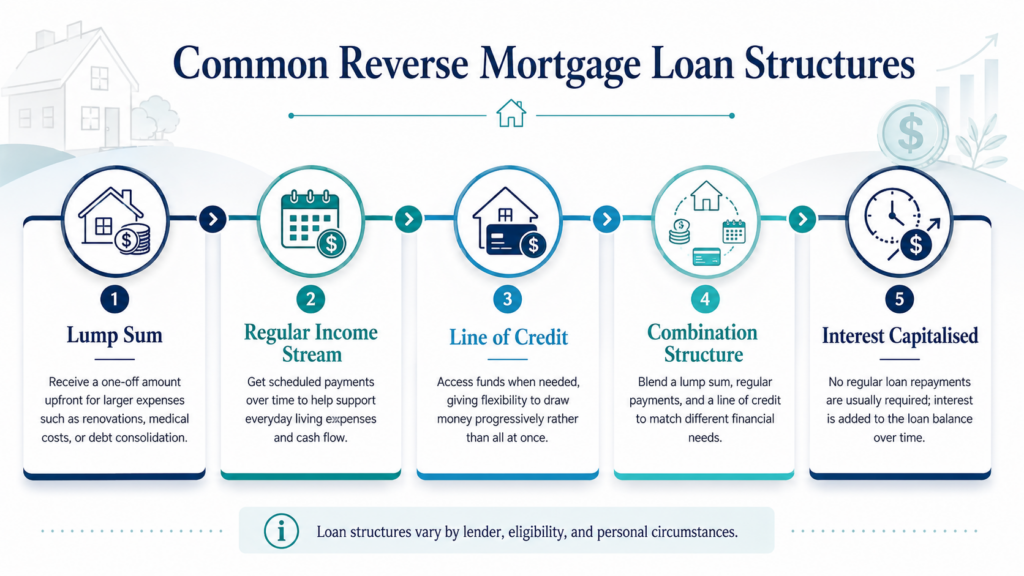
Common Reverse Mortgage Loan Structures
Reverse mortgages in Australia can usually be structured in several ways. The best option depends on your goals and lender availability.
1. Lump Sum Reverse Mortgage
A lump sum reverse mortgage provides a larger amount upfront.
This structure may suit homeowners who need money for a specific purpose, such as:
- Paying off an existing mortgage
- Clearing personal debts
- Renovating the home
- Funding aged care costs
- Paying medical expenses
- Helping with urgent repairs
- Modifying the home for accessibility
- Supporting a major lifestyle expense
The advantage of a lump sum is immediate access to funds. The downside is that interest may start accumulating on the full amount from the beginning.
A lump sum structure should be used carefully. If you only need part of the funds now, another structure may reduce interest costs over time.
2. Regular Payment Reverse Mortgage
Some borrowers may prefer regular payments instead of a large upfront amount.
This may suit retirees who want to supplement income for everyday expenses, such as:
- Groceries
- Utilities
- Council rates
- Insurance
- Healthcare
- Transport
- In-home support
- Lifestyle needs
Regular payments can provide more predictable cash flow. Because funds may be drawn gradually, interest may accumulate more slowly than if the full amount was taken upfront, depending on the product and lender terms.
This structure may be helpful for retirees who are asset-rich but cash-flow poor.
3. Reverse Mortgage Line of Credit
A line of credit allows approved borrowers to access funds when needed, up to a limit.
This structure may suit people who want flexibility rather than immediate use of the full loan amount. It can be useful for:
- Emergency expenses
- Future home repairs
- Medical costs
- Aged care planning
- Occasional income top-ups
- Unexpected bills
- Maintaining a financial safety buffer
A line of credit may reduce unnecessary borrowing because funds are only drawn when required. However, fees, interest rates and lender conditions should be reviewed carefully.
4. Combination Structure
Some borrowers may use a combination of lump sum, regular payments and line of credit.
For example, a homeowner may:
Want to know if you qualify?
Check your eligibility in minutes and take the first step towards a more comfortable retirement.
- Take a lump sum to repay an existing debt
- Set up regular payments for retirement cash flow
- Keep a line of credit for future aged care or medical needs
This can be a more tailored approach, especially where a borrower has multiple goals. However, it also requires careful planning to avoid over-borrowing.
Key Uses of Reverse Mortgage Loan Structuring
A reverse mortgage can be structured for different retirement needs.
Retirement Income Support
Some retirees own a valuable home but have limited income. A reverse mortgage may help supplement retirement income without selling the property.
This may be useful where pension income, superannuation or savings are not enough to cover rising living costs. However, borrowers should consider how accessing equity may affect government benefits and long-term financial plans.
ASIC recommends speaking with Services Australia’s Financial Information Service to understand how a reverse mortgage may affect pension or government benefits.
Paying Off an Existing Mortgage
Some Australians enter retirement with home loan debt. A reverse mortgage may be structured to clear an existing mortgage and reduce repayment pressure.
This can help improve monthly cash flow, but it also means replacing one type of debt with another. The long-term effect on home equity should be modelled before making a decision.
Home Renovations and Accessibility
Many seniors want to remain at home for as long as possible. Reverse mortgage funds may be used for home improvements such as:
- Bathroom modifications
- Ramps and handrails
- Safer flooring
- Kitchen upgrades
- Roof or structural repairs
- Heating and cooling
- Wider doorways
- Mobility-friendly changes
This can support ageing in place and make the home safer and more comfortable.
Aged Care and Home Care Costs
A reverse mortgage may help fund aged care-related expenses, including home care, residential aged care costs or support services.
This is an area where structuring is especially important. Borrowers and families should consider timing, aged pension implications, future property sale plans and professional aged care advice.
Helping Family Members
Some seniors consider using home equity to help adult children or family members with housing, education or financial support.
While this can be meaningful, it should be approached carefully. Giving away borrowed funds may affect future equity, pension outcomes and estate planning. Independent legal and financial advice is strongly recommended.
Reverse Mortgage Safeguards in Australia
Reverse mortgages in Australia include important consumer protections.
One of the most important is the No Negative Equity Guarantee. This means borrowers generally cannot owe more than the market value of the home when it is sold, provided loan conditions are met.
The National Credit Code protections state that a reverse mortgage borrower will not have to pay more than the market value of their home as repayment, even if accrued interest would otherwise make the debt higher than the property value.
Reverse Mortgages NSW also explains that reverse mortgages are regulated under the National Consumer Credit Protection Act 2009, with oversight by ASIC, with the No Negative Equity Guarantee meaning the loan amount to be repaid will not exceed the sale value of the security offered.
This protection is important, but it does not mean there are no risks. Borrowers still need to understand interest, fees, equity reduction, property obligations and future financial impacts.
Factors That Affect How Much You Can Borrow
The amount available through a reverse mortgage depends on several factors.
These may include:
- Your age
- The age of the youngest borrower
- Property value
- Property location
- Property type
- Lender policy
- Existing mortgage debt
- Loan purpose
- Product features
- Interest rate
- Whether a lump sum or staged drawdown is selected
Moneysmart provides a reverse mortgage calculator to help borrowers see how a reverse mortgage can affect the equity in their home over time.
Before applying, it is useful to model different scenarios. For example, compare taking a lump sum today versus drawing smaller amounts over several years. The difference in long-term interest and remaining equity can be significant.
Reverse Mortgage Interest and Compounding
Interest on a reverse mortgage is usually added to the loan balance. If no repayments are made, interest compounds over time.
This means interest is charged not only on the original amount borrowed, but also on previously added interest.
The longer the loan runs and the more you borrow upfront, the larger the loan balance may become.
Borrowers should ask:
- What is the interest rate?
- Is the rate variable or fixed?
- How often is interest calculated?
- Are there establishment or ongoing fees?
- Can voluntary repayments be made?
- Is there a redraw or line of credit option?
- How will the balance grow over 5, 10, 15 or 20 years?
- How much equity may remain under different property growth assumptions?
A reverse mortgage broker can help compare lender options and explain how different structures affect future equity.
Protecting Equity for the Future
Some borrowers want to preserve a portion of their home equity for future needs or beneficiaries.
Depending on the lender and product, it may be possible to structure the loan with equity protection features or conservative borrowing limits.
This may be important if you want to:
- Leave an inheritance
- Keep funds available for aged care
- Preserve downsizing flexibility
- Reduce long-term debt growth
- Avoid drawing more than needed
- Support future medical or lifestyle costs
A good reverse mortgage structure should consider not only today’s needs, but also what may happen in later retirement.
Reverse Mortgage Eligibility in Australia
Eligibility varies by lender, but common requirements may include:
- Being above a minimum age, often 60 or older
- Owning a residential property
- Having sufficient home equity
- Meeting lender property criteria
- Using the property as security
- Meeting responsible lending requirements
- Obtaining independent advice, or being encouraged to do so
- Understanding the loan terms and obligations
Reverse mortgages are generally designed for seniors and retirees who own their home or have substantial equity.
Borrowers should also understand ongoing responsibilities. These may include maintaining the property, keeping it insured and paying council rates or other property-related costs.
Reverse Mortgage Loan Structuring Mistakes to Avoid
Because reverse mortgages are long-term financial products, mistakes can have lasting effects.
Common mistakes include:
- Borrowing more than needed upfront
- Not modelling the long-term impact of compound interest
- Ignoring aged pension or Centrelink implications
- Not discussing the decision with family where appropriate
- Failing to get independent legal or financial advice
- Using funds without a clear purpose
- Forgetting future aged care needs
- Not comparing lenders and product features
- Assuming all reverse mortgages are the same
- Not understanding property maintenance obligations
The goal should be to structure the loan around real needs, not simply access the maximum amount available.
Questions to Ask Before Choosing a Reverse Mortgage
Before applying, consider asking:
- Why do I need the funds?
- How much do I need now?
- Will I need more later?
- Should I take a lump sum, regular payments or line of credit?
- How will the loan affect my future home equity?
- Will this affect my pension or benefits?
- Can I make voluntary repayments?
- What happens if I move into aged care?
- What happens if I sell the home?
- What fees apply?
- What protections are included?
- Have I received independent advice?
These questions can help ensure the loan is structured with purpose and care.
Why Work with a Reverse Mortgage Broker?
Reverse mortgage products can vary between lenders. A reverse mortgage broker can help compare options and explain how different features may suit your circumstances.
Reverse Mortgages NSW works with a wide network of specialist lenders to help seniors find suitable reverse mortgage products for retirement, aged care and lifestyle goals.
A broker can help with:
- Explaining reverse mortgage options
- Comparing lenders
- Understanding borrowing capacity
- Structuring lump sum or regular payment options
- Reviewing fees and interest rates
- Explaining product features
- Helping prepare the application
- Supporting conversations around equity protection
- Encouraging independent advice where needed
For seniors and families, having a clear explanation can make the process less stressful.
Final Thoughts
Reverse mortgage loan structuring in Australia should be handled carefully. A reverse mortgage can help senior homeowners access home equity, improve retirement cash flow, support aged care needs or fund important expenses while remaining in the home.
However, the structure matters. The choice between a lump sum, regular payment, line of credit or combination structure can affect interest, equity, flexibility and long-term outcomes.
Before applying, it is important to understand the costs, safeguards, risks and alternatives. You should also seek independent financial and legal advice so you can make an informed decision.
Reverse Mortgages NSW helps senior Australians explore flexible and transparent reverse mortgage solutions with access to specialist lenders and experienced guidance.
If you are considering a reverse mortgage in NSW or anywhere in Australia, the right loan structure can help you access equity with greater confidence and clarity.
FAQs
1. What is reverse mortgage loan structuring?
Reverse mortgage loan structuring is the process of setting up a reverse mortgage in a way that suits your needs. This may include choosing a lump sum, regular payments, line of credit or combination structure.
2. How does a reverse mortgage work in Australia?
A reverse mortgage allows eligible homeowners to borrow against the equity in their home. Regular repayments are generally not required while you live in the property and meet loan conditions. Interest is added to the loan balance over time.
3. What is the best reverse mortgage structure?
The best structure depends on your goals. A lump sum may suit one-off expenses, regular payments may suit income support, and a line of credit may suit future flexibility.
4. Can I use a reverse mortgage for retirement income?
Yes, some seniors use a reverse mortgage to supplement retirement income. It is important to consider pension impacts, long-term equity and independent advice before proceeding.
5. Can I use a reverse mortgage for aged care?
Yes, a reverse mortgage may be used to help fund aged care or home care costs. Because aged care rules can be complex, professional advice is strongly recommended.
6. What is the No Negative Equity Guarantee?
The No Negative Equity Guarantee means you generally cannot owe more than the market value of your home when it is sold, provided the loan conditions are met.
7. Does interest compound on a reverse mortgage?
Yes, interest is usually added to the loan balance and may compound over time. This can reduce the equity left in the property.
8. How much can I borrow with a reverse mortgage?
The amount depends on age, property value, lender policy, existing debts and loan structure. As a general guide, Moneysmart notes that borrowers aged 60 may be able to borrow around 15% to 20% of the home’s value.
9. Will a reverse mortgage affect my pension?
It may affect pension or government benefits depending on how the funds are accessed and used. You should speak to Services Australia’s Financial Information Service or a qualified adviser.
10. Can Reverse Mortgages NSW help compare options?
Yes. Reverse Mortgages NSW can help seniors understand reverse mortgage options, compare lender products and structure a loan based on retirement, aged care or lifestyle needs.
Disclaimer
This guide is for general information only and does not take into account your personal financial situation, objectives, needs, age, pension position, estate planning goals or aged care requirements. Reverse mortgage products, lender policies, interest rates, fees, eligibility requirements, government benefit rules and legal obligations can change. Before making any decision about a reverse mortgage, home equity release, retirement loan or aged care funding option, speak with a qualified mortgage broker, licensed financial adviser, legal professional, accountant, Services Australia Financial Information Service or relevant professional to understand what is suitable for your circumstances.
Other blog posts
-

New Driving Rules for Seniors in Australia: What Older Drivers Need to Know in 2026
If you've seen headlines about new rules for drivers over 60 in Australia, you may be wondering whether older Australians now need additional medical checks, driving tests or even a special senior licence. The reality is more nuanced. Australia doesn't have one nationwide set of driving restrictions that automatically applies...... -

Is the Government Changing the Age Pension for Homeowners?
Australian homeowners approaching or already in retirement may have seen headlines and online discussion suggesting the government could change how the Age Pension treats homeowners. For retirees who have spent decades paying off their family home, that kind of headline can understandably attract attention. But what is actually happening? As...... -

Can a Reverse Mortgage Help Fund a House Deposit?
For many Australian families, helping children or grandchildren enter the property market is becoming part of the broader retirement and estate-planning conversation. Parents may have spent decades building substantial equity in their family home while their adult children are trying to save enough for a property deposit. This creates an......
